Closing the gap for deaf learners in Africa requires more than just innovative programme design; it demands deep, sustained government partnership. Lasting change in education systems is built through policy, not projects alone, which is why the Scaling Inclusive Early Learning with Deaf Children project—a 33-month initiative led by eKitabu in collaboration with OpenDevEd, Royal Dutch Kentalis, and Busara—places institutional engagement at its core. Funded by the Global Partnership for Education’s Knowledge and Innovation Exchange (KIX) through Canada’s International Development Research Centre (IDRC), this project aims to translate pilot successes into systemic national reform across Kenya, Rwanda, and Malawi.
At the heart of this initiative is a five-pillar strategy designed to meet the specific needs of deaf children. This framework integrates deaf teachers fluent in local sign language, develops accessible teaching and learning materials, and provides robust training to build essential instructional and assessment skills. Beyond the classroom, the approach includes evidence-based sign language assessments to monitor progress and active family engagement to ensure that language development continues at home. While these elements are individually critical, their true impact relies on embedding them within the government institutions that dictate national practice.
The practical application of this partnership-led model is most visible in Malawi, where eKitabu has worked in close alignment with the Ministry of Education to weave these strategies into national frameworks. By securing a seat at the policy table through the Inclusive Education Technical Working Group, eKitabu has synchronized its efforts with government stakeholders and peer organizations. This collaboration began at the project’s inception, earning high-level backing from the Ministry of Gender, Community Development and Social Welfare—a signal that the project’s goals align with broader national interests.
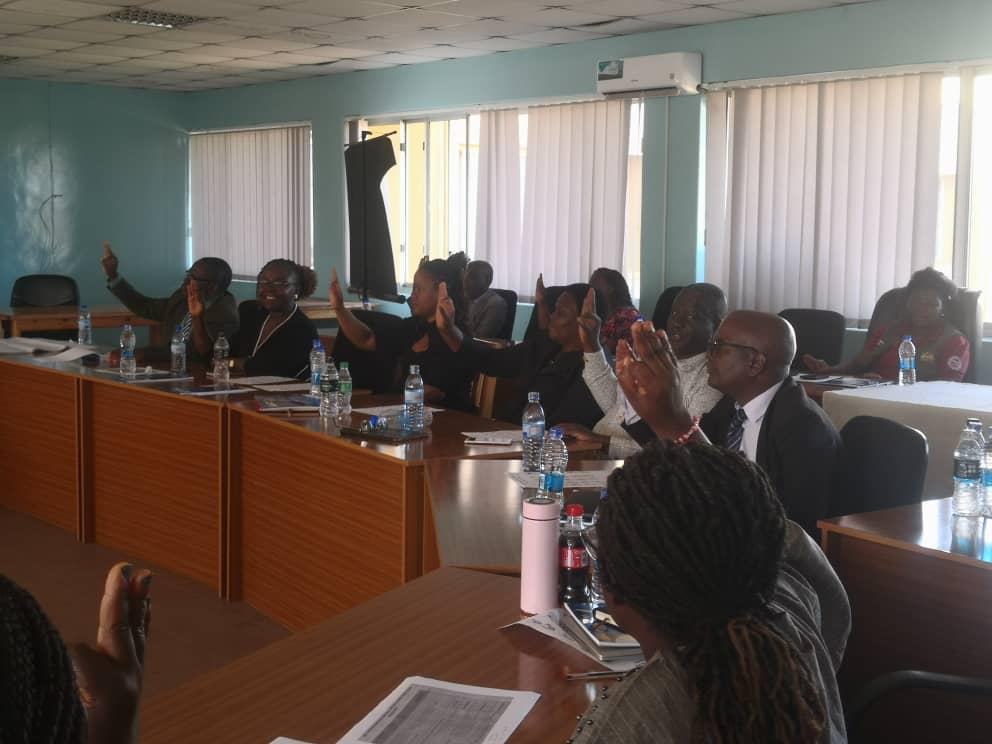
Effective advocacy requires more than just high-level visibility; it demands institutional capacity building. To bridge the gap between field evidence and legislative action, eKitabu has trained ministry directors on Malawian Sign Language (MSL) and Deaf education, fostering a deeper understanding of what is required to enhance inclusive practices. This training happened on 27–30 December 2025 in Lilongwe and targeted the directorates of Inclusive Education, Teacher Education and Development, Quality Assurance, Basic Education, and Higher Education. The training yielded great results and boosted the interest of the directors in MSL and Deaf education.
To build on this increased understanding and translate it into concrete policy and institutional action, the project also used targeted policy briefs to highlight gaps in the existing system and advocate for a deliberate pathway for the inclusion of Deaf people. The briefs generated discussions around the need for appropriate training and certification pathways for Deaf teachers. These advocacy efforts were further strengthened through the GPE KIX meeting held on 20 February 2026, which brought together key Ministry directorates and KIX partners. During the meeting, the development of a dedicated Deaf education and MSL programme within Teacher Training Colleges (TTCs) was explored. This marked an important step towards the introduction of Deaf education and MSL within the initial teacher training programme. This has led to the coordination of key stakeholders responsible for curriculum development and teacher training committing to fast-track the curriculum review process and have the programmes included in the diploma/degree teacher training programme. This direction is consistent with Malawi’s broader efforts to strengthen inclusive education and improve the relevance and quality of teacher education, and directly contributes to Human Capital Development, one of the seven cross-cutting enablers of Malawi 2063, which emphasizes the development of a globally competitive and highly motivated human resource.
This deliberate strategy of consistent, high-level engagement serves a vital purpose for long-term scalability. By opening new channels for dialogue and strengthening the government’s capacity to champion these issues independently, eKitabu is creating a foundation for advocacy that will outlast the project’s 33-month timeline. Ultimately, good project outcomes are only the beginning. By investing in government relationships early and consistently, eKitabu and its partners are laying the groundwork for inclusive education to become a permanent reality for deaf children—moving the conversation from small-scale practice to national policy.